


Enteric diseases are infections of the intestinal tract. Symptoms often include diarrhea and abdominal pain and may be accompanied by nausea, vomiting, and fever. This is sometimes referred to as food poisoning or a “stomach bug”, but these germs do not always come from food. Enteric diseases spread when the germ is swallowed. This can happen if you eat contaminated food, drink contaminated water, touch an animal or their environment, have contact with an ill person, or touch a contaminated object such as a light switch or doorknob.
Annual Outbreak Summaries for Foodborne & Enteric Diseases
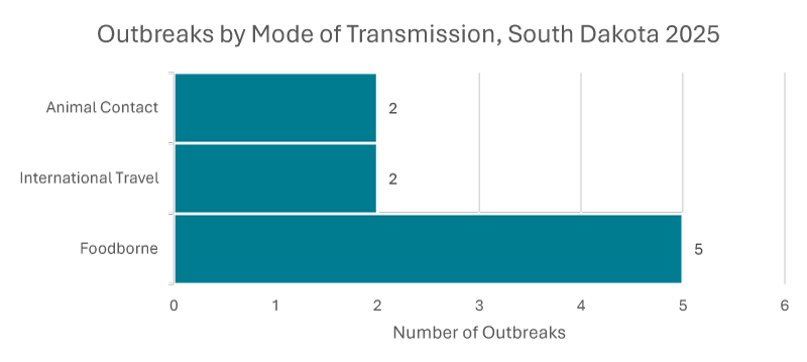
Ten outbreaks of enteric disease were investigated in 2025, involving a total of 35 cases and 9 hospitalizations. Seven outbreaks were part of a larger outbreak affecting multiple states. All were caused by various strains of Salmonella, with 9 serotypes represented. Serotypes included Salmonella Enteritidis (14 cases), Typhimurium (11 cases), Mbandaka (3), Indiana (2), London (1), Anatum (1), Lome (1), Telelkebir (1), and Hadar (1). Known sources included backyard poultry (10 cases), oysters (1 case), geckos (1 case), and international travel (3 cases). Two outbreaks were suspected to be foodborne, but no source was confirmed.
An additional 17 diarrheal illness outbreaks were reported from long-term care and other healthcare facilities. Several of these outbreaks were either confirmed or suspected to be caused by norovirus. Outbreaks of norovirus-like illness are common during colder months and generally involve diarrheal illness along with high rates of vomiting. Norovirus is the most common cause of foodborne illness and can spread easily between people, especially those who live in the same household, attend the same daycare, or live in a group residential setting. Food handlers can also spread the virus if they prepare food for others while sick or recently after recovering from symptoms. Healthcare facilities should implement infection control practices to prevent the spread of germs in the healthcare setting. Individual cases of norovirus are not reportable to the South Dakota Department of Health.
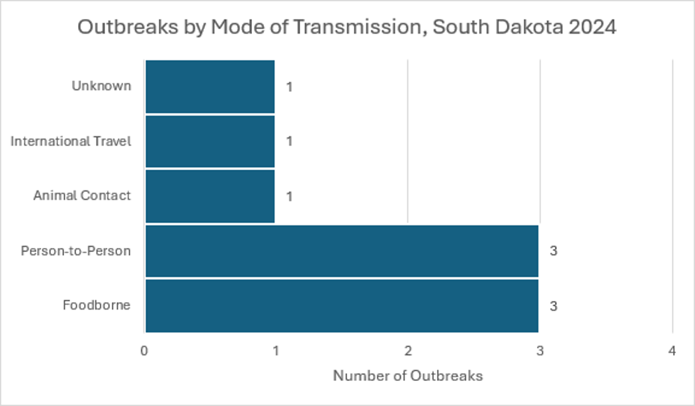
Nine outbreaks of enteric disease were investigated in 2024. Six were part of a larger outbreak or cluster investigation involving multiple states. Various strains of Salmonella caused the majority of clusters and illnesses. Primary modes of transmission for these outbreaks included: person-to-person (3), foodborne (3), animal contact (1), international travel (1), and unknown (1). The outbreak with unknown transmission was linked to the same facility, suggesting either person-to-person or environmental spread.
In 2024, germs that caused enteric disease outbreaks in South Dakota included Shiga toxin-producing Escherichia coli, Shigella flexneri, Cryptosporidium, Giardia, and Salmonella. Salmonella serotypes included Salmonella Enteritidis, Typhimurium, Litchfield, Brandenburg, and Mbandaka.
An additional 16 diarrheal illness outbreaks were reported from long-term care and other healthcare facilities. Several of these outbreaks were either confirmed or suspected to be caused by norovirus. Outbreaks of norovirus-like illness are common during colder months and generally involve diarrheal illness along with high rates of vomiting. Norovirus is the most common cause of foodborne illness and can spread easily between people, especially those who live in the same household, attend the same daycare, or live in a group residential setting. Food handlers can also spread the virus if they prepare food for others while sick or recently after recovering from symptoms. Healthcare facilities should implement infection control practices to prevent the spread of germs in the healthcare setting. Individual cases of norovirus are not reportable to the South Dakota Department of Health
Thorough handwashing is one of the best ways to prevent illness, especially before eating or preparing food, or if you or someone in your household is sick with diarrhea and/or vomiting. Be aware that animals (including livestock and pets) can carry germs, even though they may not show symptoms. Prior to international travel, talk to a healthcare provider about recommended vaccines and practice safe food and water precautions while traveling. Visit Foodsafety.gov or the DOH Resource Library for more info on reducing your risk of foodborne illness.
Young children and older adults are at higher risk of infection. Germs can spread easily when hand hygiene and disinfection are poor, especially in daycares or group living facilities. There are resources available for childcare and long-term care facilities.
When outbreaks are identified, the Department of Health interviews ill people to understand where or what they may have been exposed to before becoming sick. Participation by the public is the crucial first step in outbreak response. As outbreak response progresses, DOH works with public health partners, regulatory agencies, and affected facilities as appropriate. Visit the FDA website or USDA’s website for up-to-date information on recalls and safety alerts. See CDC’s website for information on current outbreaks.
This report does not include all outbreaks in South Dakota, only those that are reported and identified. Many people with diarrheal illness do not seek medical care. Among those who do, not everyone is tested to determine the source of their illness. As a result, not all cases of illness or outbreaks are reported to the Department of Health. If you think you may have a foodborne illness, contact your medical provider.