



South Dakota WIC
The South Dakota WIC (Women, Infants, and Children) program, administered by the South Dakota Department of Health, provides eligible participants with nutritious foods, nutrition education, and support services to ensure the well-being of mothers and young children. The program focuses on addressing nutritional deficiencies, promoting healthy eating habits, and preventing health problems related to inadequate nutrition.
South Dakota WIC Dietary Guidelines About Family Nutrition Services
SD Nutrition Landscape Assessment Dashboard
Some key features and components of the South Dakota WIC program may include:
- Eligibility: The program is designed for low-income individuals who meet specific income guidelines and have a nutritional risk, which can be determined through health and dietary assessments.
- Nutritious Foods: Participants receive vouchers or electronic benefit cards that can be used to purchase a variety of nutritious foods such as fruits, vegetables, whole grains, dairy products, and infant formula. The food packages are tailored to meet the specific nutritional needs of pregnant women, breastfeeding mothers, infants, and young children.
- Nutrition Education: The program offers individual and group counseling sessions where participants receive guidance on proper nutrition, meal planning, breastfeeding support, and infant feeding practices. The goal is to promote healthy eating habits and provide participants with the knowledge and skills necessary to make nutritious choices for themselves and their families.
- Referrals and Support Services: South Dakota WIC connects participants with other health and social services in the community. This may include referrals to healthcare providers, immunization services, prenatal care, and assistance with accessing additional resources such as healthcare coverage, child care, and family support programs.
- Breastfeeding Support: The program places a strong emphasis on supporting and promoting breastfeeding as the optimal feeding choice for infants. Trained staff provide guidance, education, and support to breastfeeding mothers, including help with common breastfeeding challenges and access to breast pumps if needed.
New Dietary Guidelines for Americans
Eating well doesn’t have to be complicated! The U.S. Departments of Health and Human Services (HHS) and Agriculture (USDA) have released the latest Dietary Guidelines for Americans (DGA). These guidelines help people of all ages make smart food choices. The big message? Eat real food.
The new guidelines focus on whole, nutrient-rich foods and encourage us to limit highly processed products. Here’s what that looks like:
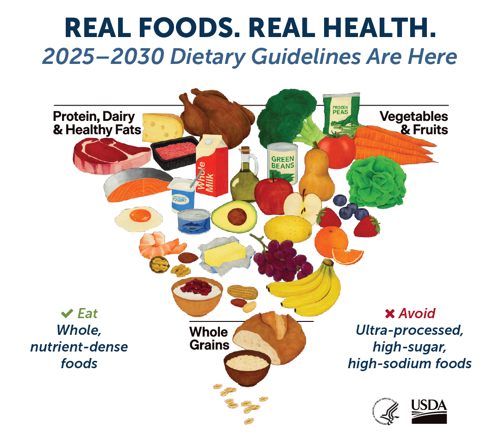
- Fill Your Plate with Whole Foods: Fruits, vegetables, lean proteins, healthy fats, and whole grains.
- Limit Processed Foods: Avoid foods high in added sugars, sodium, artificial additives, and sweeteners.
- Protein Matters: Aim for a little more protein than before—about 82–109 grams per day for someone who weighs 150 pounds (0.54-0.73 grams per pound). Include a variety of sources like:
- Meat, poultry, seafood
- Eggs, beans, nuts, seeds
- Healthy Fats: Eat healthy fats from foods like:
- Avocados, nuts, seeds, olives, seafood, dairy
- Cut Back on Added Sugars:
- Children under 10: No added sugars
- Everyone else: Keep it under 10 grams per meal
- Fruits & Vegetables Are a Must:
- Enjoy a mix of colorful fruits and vegetables every day:
- Vegetables: about 3 servings per day
- Fruits: about 2 servings per day
- You can choose fresh, frozen, or canned (without added sugar).
- Enjoy a mix of colorful fruits and vegetables every day:
- Choose Whole Grains: Swap refined carbs for whole grains whenever possible.
- Choose foods like: brown rice, oats, whole wheat bread, or pasta.
Want to put these guidelines into action? Try these simple swaps:
- Snack Smart: Swap chips for apple slices with peanut butter.
- Protein Boost: Add beans to soups or salads for extra protein.
- Whole Grain Upgrade: Choose whole wheat bread instead of white.
- Healthy Fats: Sprinkle nuts or seeds on yogurt or oatmeal.
- Sweet Treats: Try fresh fruit instead of sugary desserts.
Healthy eating starts with real food. By focusing on whole foods and limiting added sugars and processed items, you’re setting your family up for success. Small changes can make a big difference!
For more details, visit DietaryGuidelines.gov