


Nutrition
Eating a healthy, balanced diet full of nutrient-dense foods can make all the difference. Some examples of nutrient-dense foods include fruits, vegetables, whole grains, lean meats, beans, limited amounts of healthy fats, and low-fat or fat-free dairy products. Nutrition is an especially important aspect of ensuring children grow and develop properly.
Learn More About Nutrition View the SD Nutrition Landscape Assessment Dashboard
In a fast-paced world that is often focused on what's most convenient, neglecting valuable nutrients in your diet can be easy. If maintaining a nutritious diet feels daunting or impossible, you are not alone in that.
New Dietary Guidelines for Americans
Eating well doesn’t have to be complicated! The U.S. Departments of Health and Human Services (HHS) and Agriculture (USDA) have released the latest Dietary Guidelines for Americans (DGA). These guidelines help people of all ages make smart food choices. The big message? Eat real food.
The new guidelines focus on whole, nutrient-rich foods and encourage us to limit highly processed products. Here’s what that looks like:
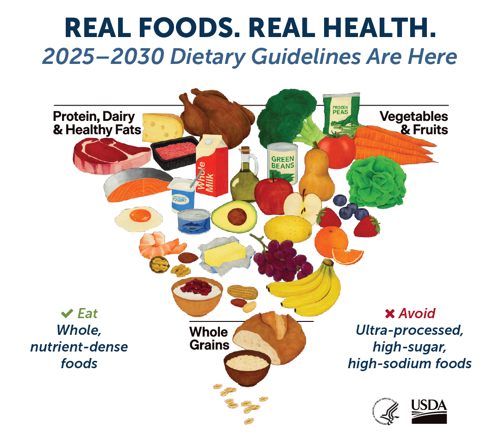
- Fill Your Plate with Whole Foods: Fruits, vegetables, lean proteins, healthy fats, and whole grains.
- Limit Processed Foods: Avoid foods high in added sugars, sodium, artificial additives, and sweeteners.
- Protein Matters: Aim for a little more protein than before—about 82–109 grams per day for someone who weighs 150 pounds (0.54-0.73 grams per pound). Include a variety of sources like:
- Meat, poultry, seafood
- Eggs, beans, nuts, seeds
- Healthy Fats: Eat healthy fats from foods like:
- Avocados, nuts, seeds, olives, seafood, dairy
- Cut Back on Added Sugars:
- Children under 10: No added sugars
- Everyone else: Keep it under 10 grams per meal
- Fruits & Vegetables Are a Must:
- Enjoy a mix of colorful fruits and vegetables every day:
- Vegetables: about 3 servings per day
- Fruits: about 2 servings per day
- You can choose fresh, frozen, or canned (without added sugar).
- Enjoy a mix of colorful fruits and vegetables every day:
- Choose Whole Grains: Swap refined carbs for whole grains whenever possible.
- Choose foods like: brown rice, oats, whole wheat bread, or pasta.
Want to put these guidelines into action? Try these simple swaps:
- Snack Smart: Swap chips for apple slices with peanut butter.
- Protein Boost: Add beans to soups or salads for extra protein.
- Whole Grain Upgrade: Choose whole wheat bread instead of white.
- Healthy Fats: Sprinkle nuts or seeds on yogurt or oatmeal.
- Sweet Treats: Try fresh fruit instead of sugary desserts.
Healthy eating starts with real food. By focusing on whole foods and limiting added sugars and processed items, you’re setting your family up for success. Small changes can make a big difference!
For more details, visit DietaryGuidelines.gov
Benefits of Balanced Nutrition
There are countless benefits to fueling your body with the right foods and drinks it needs. According to the CDC, a few of those benefits include:
- Supporting muscles and strengthening bones.
- Lowering the risk of many serious, chronic diseases.
- Aiding in proper digestion.
- Helping maintain and achieve ideal body weight.
- Helping children grow and supporting youth brain development.
- Boosting immunity.
Build a Healthy Eating Routine When You're Pregnant or Breastfeeding
When you're pregnant or breastfeeding, it's important to give yourself and your baby the nutrition needed to grow and thrive. (Source: dietaryguidelines.gov)
Healthy Eating: 101
Figuring out what it actually means to eat healthy is a feat in today’s culture. Learn more about food groups, having a balanced diet, and what guidelines to use.
My Native Plate
Use your plate as a guide to help you eat in a healthy way! Fill half your plate with vegetables, fill the other half of your plate with a grain/starch and a protein, and add a side of fruit.
Nutrition.gov Recipes
Find healthy recipes from federal government and Cooperative Extension sites in this recipe collection.
Are Frozen and Canned Produce Just as Healthy as Fresh Produce?
South Dakotans as a whole do not eat enough fruits and vegetables. Learn the pros and cons of implementing fresh, frozen, and canned produce into your diet.
Tips to Support Healthy Routines for Children and Teens
Healthy habits are the building blocks of lifelong well-being for children and teens. Healthy eating and physical activity are important for growth and development and to prevent chronic health conditions. (Source: CDC.gov)
Possible Consequences Poor Nutrition
Fueling your body with the perfect combination of fruits, vegetables, proteins, and healthy fats can improve your physical and mental health. On the other hand, neglecting a balanced diet or relying too heavily on processed foods, added sugars and saturated fats can lead to consequences that may reduce your quality of life. According to the CDC, relying on a diet without necessary nutrients can:
- Reduce your energy levels.
- Lead to poor mental health.
- Lead to being overweight or obese.
- Increased risk of heart disease and stroke.
- Increased risk of type 2 diabetes.
- Increased risk of some cancers.